Ons Straatje
Most Dutch streets work the same way. There is a WhatsApp group where someone asks if anyone has a ladder, where lost cats are reported, and where photos of unfamiliar cyclists circulate when bikes start going missing. There is an annual straatfeest, the street barbecue, which is when you finally meet the family who moved into number 22 last spring. Neighbors feed each other's cats, water plants when someone is away, and keep an eye on each other's parcels.
Ons Straatje is a small website built for that kind of street. It is a private directory for one block: every household with a portrait, a short bio, and as many photos as the residents want to upload. Only the people who live there can see it.
The first version was a wall of printed A4 sheets at the annual barbecue, so newcomers could put faces to names. The wall came down at the end of the night. The site is what stayed.
The street is the interface
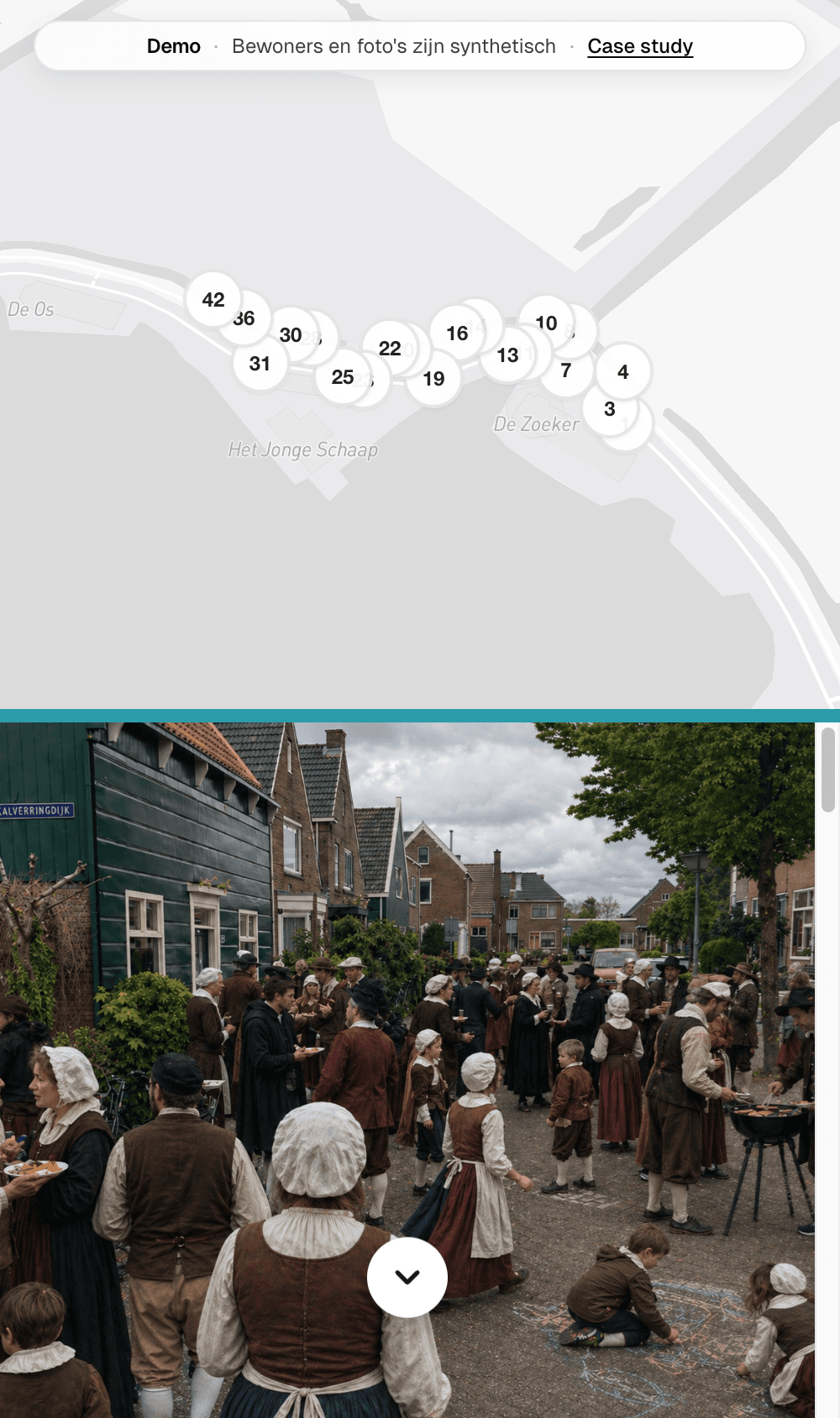
The homepage is a map of the street itself, with the household list beside it. Choosing a house slides its card over the map: the portrait, the names, the bio, the photos the family chose to share. The design reads like a printed street directory rather than a social app, and the demo portraits, generated in the style of Dutch masters, set that tone from the first visit.
Access without passwords
Residents sign in through a private invite link shared in the neighborhood WhatsApp group. There are no accounts to set up and no passwords to remember. Once a device has been used, it stays signed in. If a link is shared too widely, the admin can revoke it and issue a new one.
The result is that onboarding a whole street takes a single WhatsApp message.
Edit your own listing
Every resident can rewrite their bio, add or reorder photos, and update names as a family changes. They can take their listing offline with a single toggle and bring it back later. There are no comments, no feed, no algorithm.
Quiet by default
The whole site is set to noindex, so search engines cannot find it. There are no analytics, no third-party scripts, no tracking pixels. The only data on the server is what residents have chosen to put there.
Every change is snapshotted before it is saved, so any edit can be reverted from the admin panel in two clicks. The same applies to revert itself, which means accidental rollbacks are also recoverable.
Mobile is the default
Most opens happen on a phone, in the same WhatsApp thread the invite came through. The map and the household list collapse into a single column on small screens, the photos stay tappable, and the edit form works one-handed.
Built to be reused
The codebase already runs more than one street. Configuration is a handful of environment variables: street name, city, hero image, map center. A new neighborhood can come online with a fresh database and a Docker compose up. The stack is Next.js, PostgreSQL, and S3-compatible object storage, hosted wherever you want.
If you would like this running for your own street, get in touch.