Collabhouse
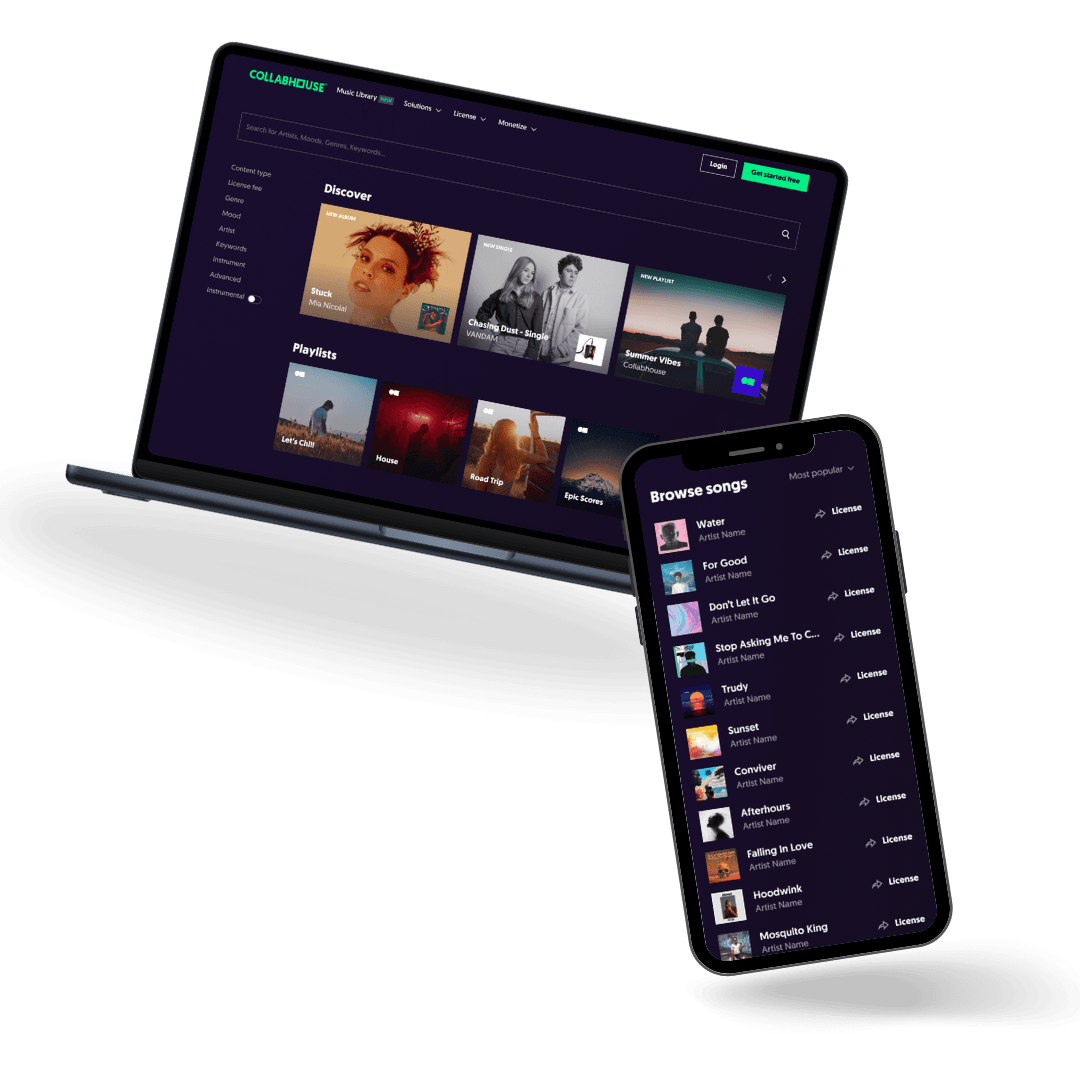
Collabhouse is a music technology platform for artists, labels and creators: distribution to the streaming services, sync licensing through its Music Library, artist-influencer collaborations in the Collab Market, and royalty splits that can be held as tokens and traded. When I joined in April 2023, all of it was built and run by an external agency. The company had decided to bring engineering in-house, and my job as tech lead was to lead that transition while the platform kept running.
The handover
An abrupt cutover was the obvious risk, so the transition ran in phases. In the first phase I was the single technical point between Collabhouse and the agency: decisions, incidents and releases passed through that channel while I learned the system the agency had built. That meant the architecture, and it also meant the domain underneath it, how royalties are calculated, how rights are registered and split, and how a release moves through the distribution pipeline to the stores.
As we hired, the balance shifted. New engineers were onboarded into a mature codebase they had not written, each taking ownership of a part of the platform as the agency's involvement in that part wound down. By the end the platform was maintained and extended entirely by its own team, and the knowledge that had lived at the agency lived in-house.
Money in small amounts
Streaming royalties arrive as very small amounts attached to very many plays. The platform collects them from the distribution side, splits each amount across the rights holders of a track according to its split agreement, and pays the results out. Because splits can be held as tokens, the set of rights holders for a track can change between one payout period and the next.
This is the part of the platform where a bug costs someone money that belongs to them, so it got the most conservative treatment. The team stabilized the reporting pipeline from the distribution aggregator and implemented PayPal Payouts to move collected royalties to rights holders. Artists check their statements. The numbers had to hold up.
Integrations
The platform stands on third-party services, and a large share of the team's work was keeping those seams solid:
- Cyanite, an AI service that tags music by mood and genre, wired into search so the Music Library can surface similar songs for sync licensing.
- The distribution aggregator that carries releases to the streaming services. Stabilizing its delivery and reporting integration was some of the first work the internal team owned.
- Bird for in-app messaging, so artists and creators can negotiate collaborations inside the platform.
- PayPal Payouts for royalty disbursement.
Each integration belonged to an engineer on the team, including its failure modes and the vendor relationship, rather than to whoever had touched it last.
Deployments that could not miss
Releases in music have street dates. A deploy that breaks the distribution pipeline on the wrong day delays someone's release, and an artist does not get that day back. So releases were managed as part of the engineering work: reviewed, reversible deployments, with the sensitive paths, distribution and payouts, handled with the most care.
The platform stayed in continuous service through the whole handover. The agency stepped back, the team came up, and the work kept shipping.
What the team shipped
While the transition ran, the team also delivered:
- Cyanite-backed similarity search in the Music Library
- A stabilized integration with the distribution aggregator
- In-app messaging between artists and creators
- PayPal Payouts for royalty disbursement
- Simplified registration and account permissions